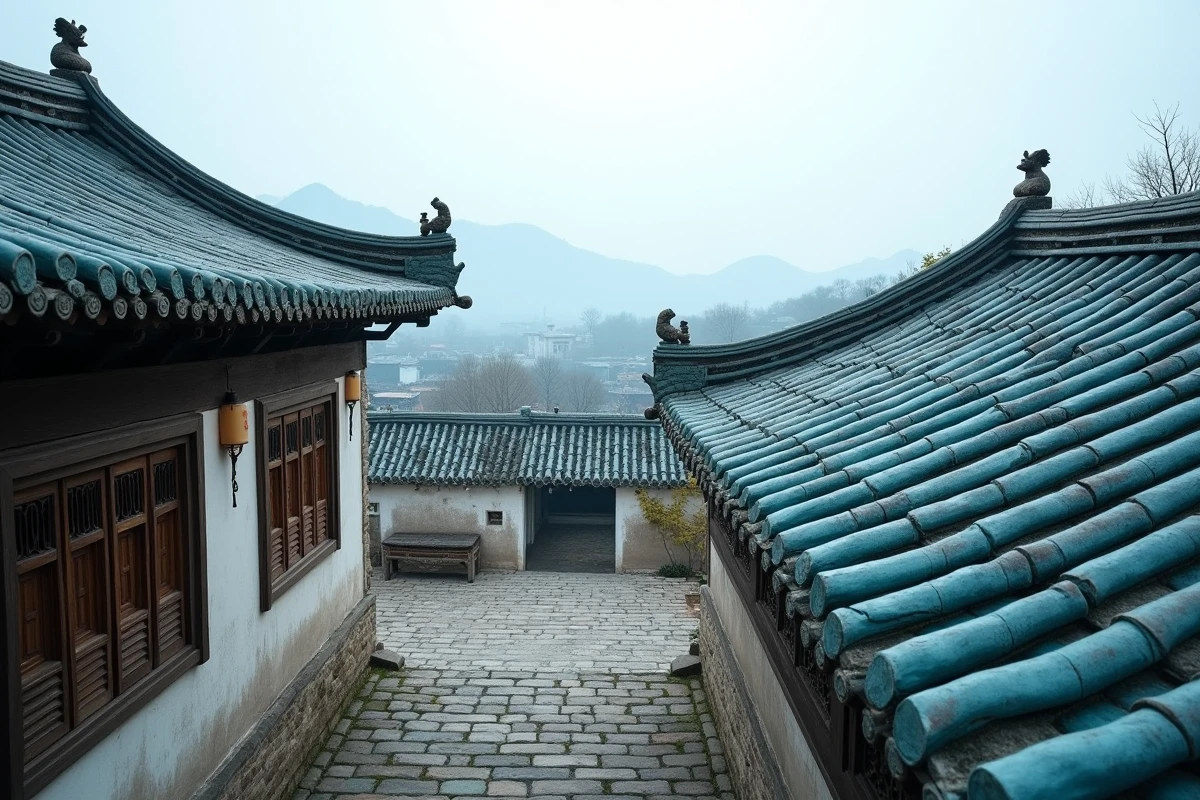
The blue glazed tiles that crown certain Chinese buildings are not a trivial decorative choice. They represent a precise architectural code, linked to the relationship between imperial power and Heaven in Chinese cosmology. Understanding what the notion of a blue roof encompasses in China requires distinguishing between two realities: an ancient symbolic tradition reserved for ritual buildings, and a contemporary, technical meaning related to rainwater management.
Blue Glazed Tile and Chinese Imperial Cosmology
In Chinese imperial architecture, the color of a roof was never left to chance. It adhered to a codified system where each hue corresponded to a rank, a function, or a cosmological concept. Yellow, reserved for the emperor, dominated the Forbidden City. Green covered princely residences or certain Buddhist temples.
Blue was the color assigned to Heaven. Its use on rooftops signaled a building dedicated to celestial worship or agrarian rites linked to cosmic forces. This codification was not an aesthetic convention but a strict imperial prescription, the transgression of which could be sanctioned.
To fully grasp what a blue roof is in this context, it must be connected to this architectural grammar where the roof functioned as a visible sign of the link between a building and the cosmic order.
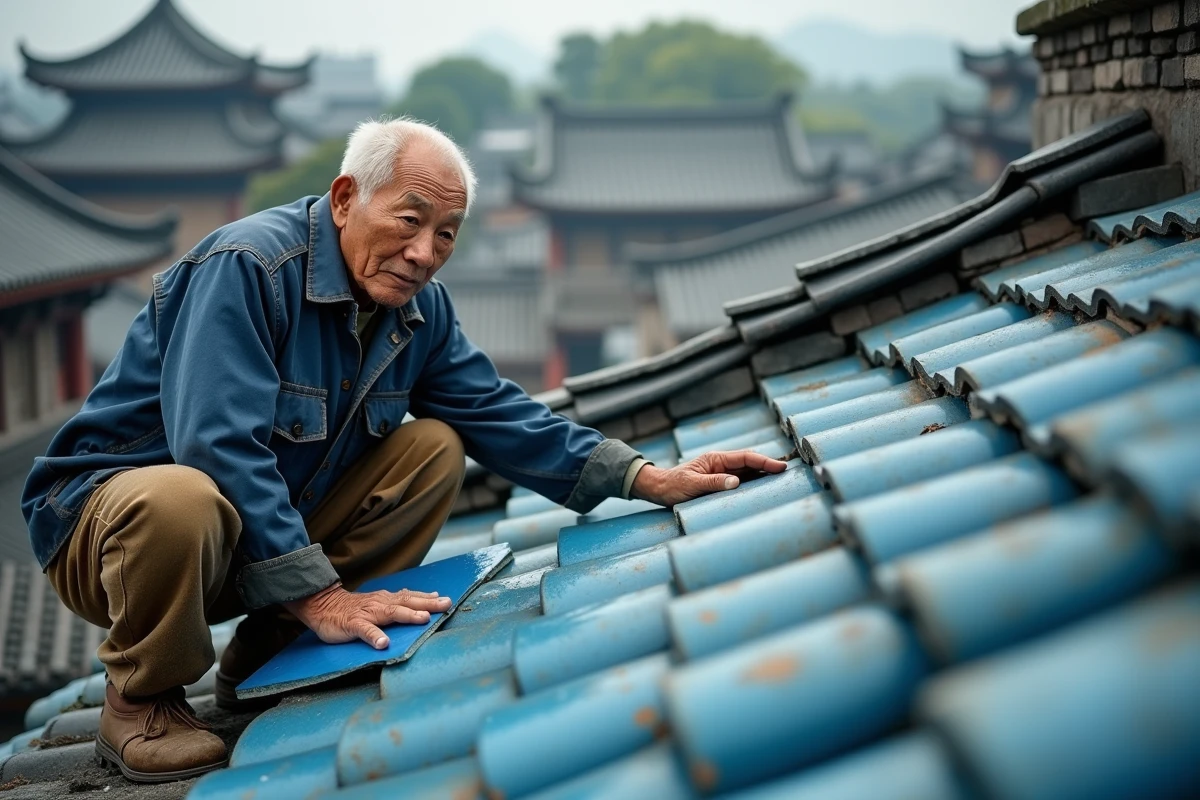
Temple of Heaven in Beijing: the most famous blue roof in the world
The most recognizable example remains the Hall of Prayer for Good Harvests, within the Temple of Heaven complex in Beijing. This circular building, topped with a triple roof of blue glazed tiles, embodies all the symbolism of this tradition. The emperor would go there to perform rites aimed at obtaining favorable harvests.
The triple blue roof represents the celestial vault, and the circular shape of the building refers to the Chinese conception of Heaven as round, in contrast to the square Earth. This is not an ornament: it is an architecture that materializes a cosmology.
Today, this monument remains one of the most visited sites in Beijing. Its prominence in tourist circuits helps maintain blue as a visual symbol of Heaven in the Chinese collective imagination, far beyond the circle of specialists in ancient architecture.
Why so few blue roofs have survived
Blue glazed roofs were reserved for a very limited number of ritual buildings. Unlike the omnipresent imperial yellow in palaces, or the green of temples, blue only covered buildings related to the worship of Heaven. This rarity explains the low number of blue roofs still visible.
The preservation of these roofs is strongly regulated by heritage protection rules. Restorations must use historically attested materials and colors, which limits any modifications. These conservation constraints do not apply to ordinary roofs, which freely adopt modern solutions (sheets, industrial tiles).
Symbolism of Colors in Traditional Chinese Architecture
The chromatic system of Chinese imperial architecture was based on the theory of the five elements (wuxing), which associated colors, cardinal directions, and natural concepts. Blue-green (qing) corresponded to the East and wood, red to the South and fire, yellow to the Center and earth, white to the West and metal, and black to the North and water.
The blue roof drew a precise meaning from this grid:
- It visually connected the building to Heaven, adopting the hue associated with the celestial vault in Chinese cosmology
- It marked the ritual function of the building, distinct from the residential or administrative functions indicated by other colors
- It fit into a hierarchical system where each roof color signaled a rank and a function, readable by all subjects of the empire
This coding made imperial architecture “speak”: a glance at the roof was enough to identify the nature of the building without entering it.
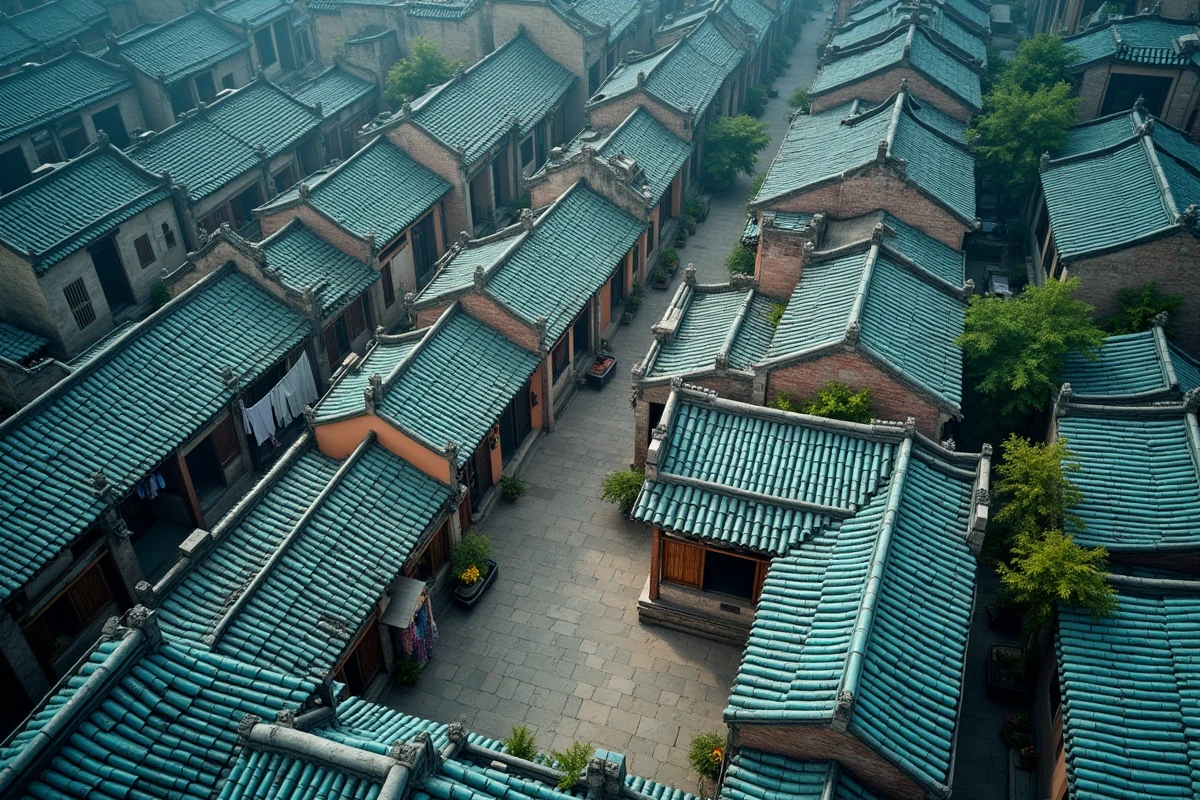
Contemporary Blue Roof: From Symbolism to Water Management
The term “blue roof” has seen a revival in recent years, completely disconnected from imperial symbolism. In urban planning and sustainable construction, a blue roof refers to a technical roof designed for temporary rainwater retention, intended to limit urban runoff. The principle relies on a rooftop storage system that holds rainwater before gradually releasing it.
This functional meaning, by analogy with “green roofs” (vegetated roofs), is well established in international literature on sustainable construction. It has no connection to the actual color of the roof or to the Chinese tradition.
Two Definitions, One Term
The coexistence of these two meanings can be confusing. The table below clarifies the distinction:
| Traditional Blue Roof (China) | Technical Blue Roof (Urban Planning) | |
| Function | Symbolic, ritual | Rainwater management |
| Actual Color | Blue glazed tiles | Indifferent |
| Context | Chinese imperial architecture | Global sustainable construction |
| Era | Mainly Ming and Qing Dynasties | Contemporary urban planning |
Why the Blue Roof Tradition Endures in China
The persistence of this tradition is due to several mutually reinforcing factors. The first is heritage-related: monuments classified like the Temple of Heaven are subject to restorations faithful to the original materials, ensuring the physical transmission of the tradition.
The second is tourist and identity-related. The blue roof of the Temple of Heaven functions as a visual marker of Beijing, reproduced on postcards, guides, and official communication materials. This visibility maintains the familiarity of the Chinese and international public with this image.
The third factor is cultural. The cosmology of the five elements, even if it no longer organizes political life, remains a living reference in Chinese popular culture: festivals, martial arts, traditional medicine, feng shui. Celestial blue retains its symbolic charge in this broader context.
The Chinese blue roof is therefore not a frozen survival. It is an architectural object whose original meaning, the ritual link between the emperor and Heaven, has transformed into a heritage and identity symbol, carried by the conservation of monuments and by the persistence of a cosmological imagination in contemporary Chinese culture.