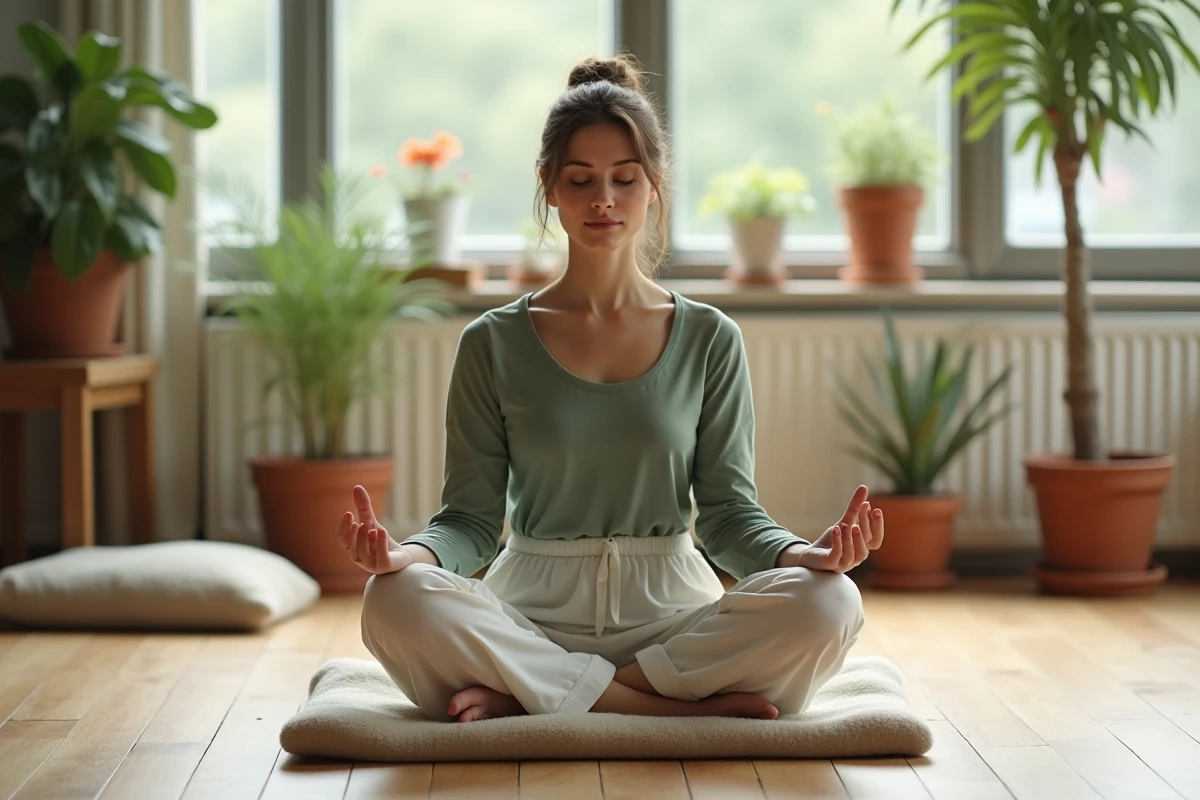
During a seated meditation session, the body sometimes begins to sway gently back and forth or side to side, without any intentional effort. This phenomenon, often described as a pendulum movement originating from the torso, affects both beginners and regular practitioners. It can be explained by the interaction between inward attention, the autonomic nervous system, and the body’s postural mechanisms.
Postural control and internalized attention: the basic mechanism
The body maintains its balance through an automatic system that integrates visual, vestibular (inner ear), and proprioceptive (sensors in muscles and joints) information. This control operates in the background, without conscious effort.
When attention is strongly focused on an internal point, such as the breath or the center of the chest, automatic postural control loses precision. Research in postural neuroscience shows that this internalized concentration increases the body’s micro-oscillations, even in individuals without meditation experience.
The swaying of the body during meditation is therefore the result of a measurable physiological phenomenon: the brain reallocates attentional resources towards introspection, at the expense of fine postural maintenance.
Closing the eyes accentuates the phenomenon. Vision provides a powerful spatial reference for stabilizing the body. By removing it, one takes away one of the three pillars of balance, which amplifies the natural oscillations of the torso.
Autonomic nervous system and stress reactivity
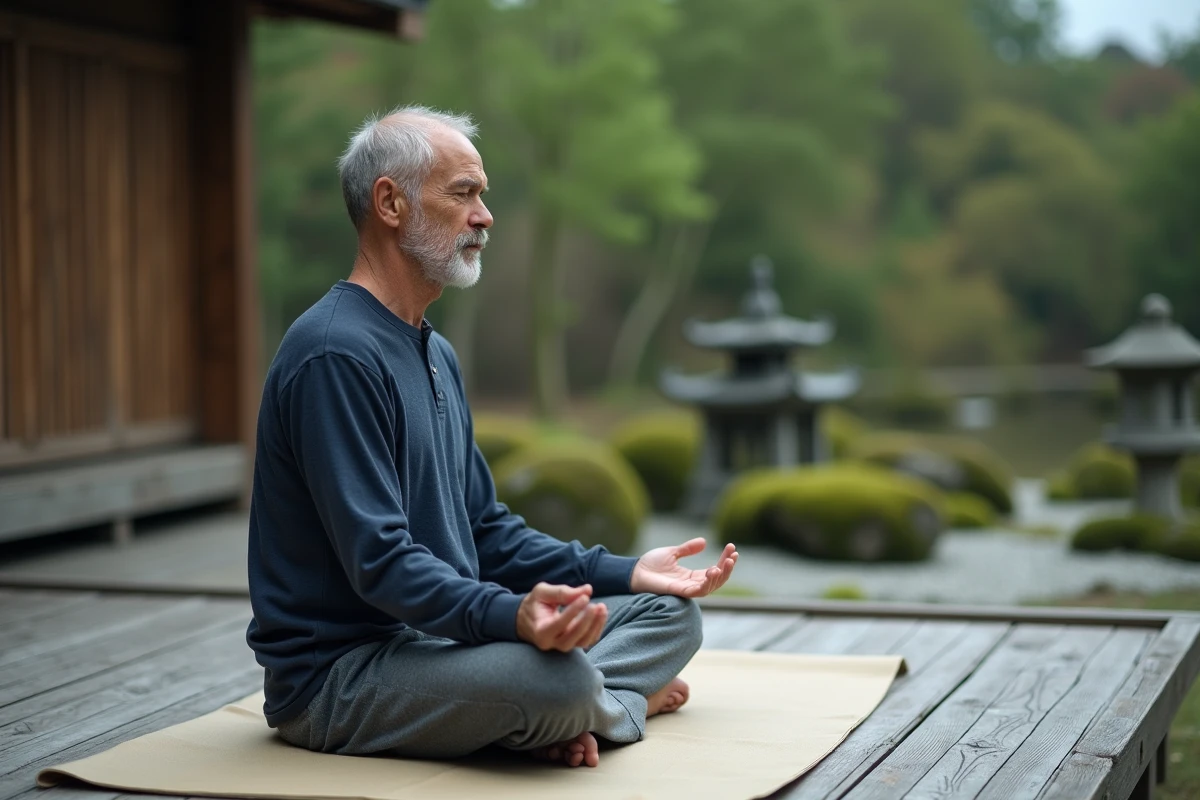
The autonomic nervous system plays a central role in the occurrence of swaying. It is divided into two branches: the sympathetic (activation, alertness) and the parasympathetic (rest, recovery). During meditation, these two branches interact dynamically.
In individuals with a history of anxiety or post-traumatic stress, the autonomic nervous system is more reactive. It oscillates more between sympathetic and parasympathetic activation during introspection. This neurovegetative instability often manifests as more pronounced involuntary movements during practice.
Heart coherence illustrates this link well. When breathing slows and becomes regular, heart rate variability synchronizes. This shift towards a dominant parasympathetic state can induce a form of overall muscle relaxation, causing the body, less “held,” to sway.
Swaying and release of accumulated tension
Some practitioners describe swaying as a sensation of release. The body holds chronic tensions related to stress, anxiety, or constraining daily postures. The deep relaxation induced by meditation releases these tensions asymmetrically, generating micro-movements.
This phenomenon is not pathological. It reflects a readjustment of muscle tone in a context of increased relaxation.
Meditation and swaying: should we be concerned or let it happen?
The answer depends on the intensity and the feeling. A slight rhythmic sway, perceived as pleasant or neutral, poses no problem. Several hospital mindfulness programs, notably at Lille University Hospital and the Sainte-Anne Hospital Center in Paris, have integrated a module on involuntary movements in meditation into their MBSR/MBCT groups since 2022.
Their structured guidelines clearly distinguish two situations:
- A light and regular sway can simply be observed without trying to control it, like any other bodily sensation
- A sway that intensifies, accompanied by an increased heart rate or anxiety, requires active intervention: slow down the breathing, shorten the duration of the session
- A movement that persists after the end of meditation or causes dizziness warrants discussing it with a healthcare professional
The recommended attitude is therefore neither total abandonment to the movement nor tense resistance. It is a middle ground: observe, then adjust if the intensity exceeds a comfortable threshold.
Concrete techniques to regulate swaying in meditation
Several simple adjustments can reduce oscillations without sacrificing the depth of practice.
Physical grounding of the pelvis and feet
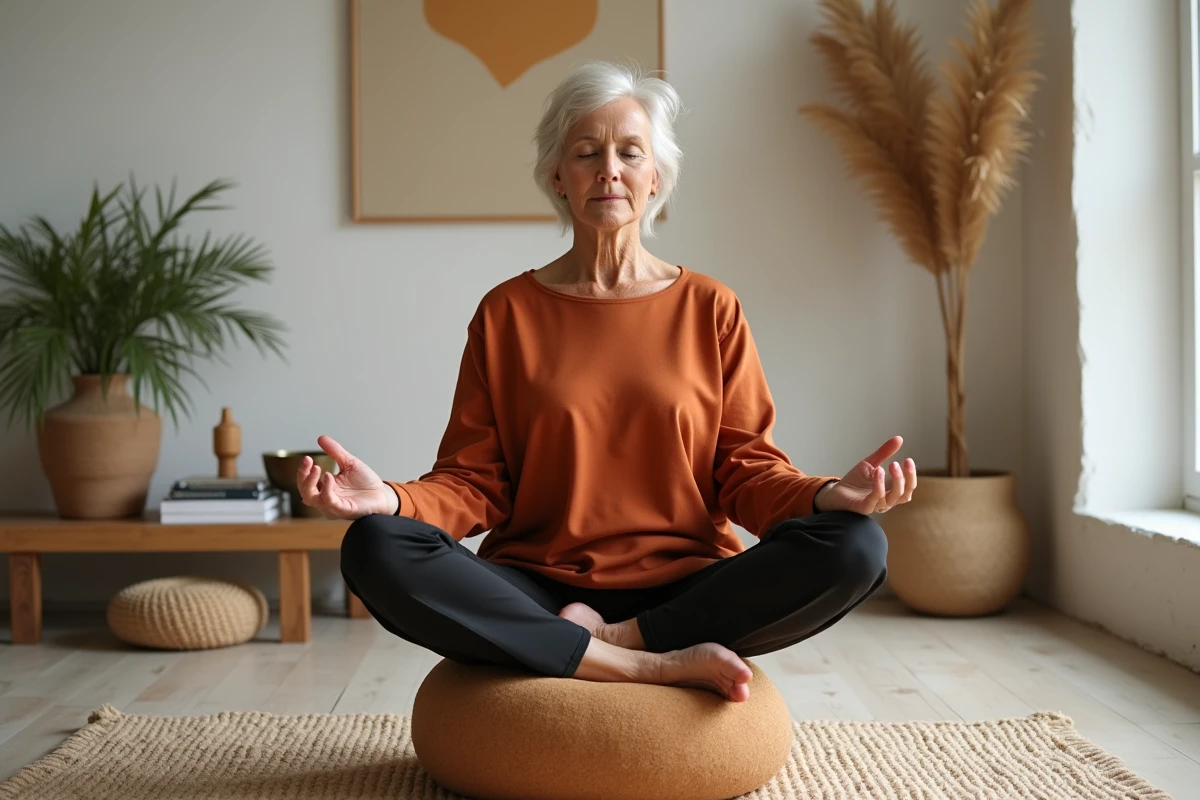
Updated MBSR protocols recommend grounding the feet flat on the floor (when sitting on a chair) or slightly locking the pelvis (when seated on the floor). A stable support of the pelvis mechanically reduces the amplitude of swaying by providing a fixed point around which the body sways less.
Breathing and session duration
Slightly slowing the breathing rate gradually promotes parasympathetic dominance, without abrupt transitions. Lengthening the exhalation, in particular, activates the vagus nerve and stabilizes heart rate.
Shortening the duration of the exercise also works. A practitioner who sways significantly after about ten minutes can break their sessions into shorter ones: two short sessions with a break in between, rather than one long session where the swaying self-amplifies.
External point of attention
Briefly shifting attention to an ambient sound or the contact of the hands on the knees rebalances the attentional sharing between internal perception and external perception. This alternation often suffices to reduce oscillations without breaking the meditative state.
- Keep the eyes half-closed rather than fully closed, to maintain minimal visual reference
- Focus on the contact areas between the body and the support (buttocks, feet)
- Alternate a few cycles of breathing with awareness of the breath, then a few cycles with awareness of surrounding sounds
The swaying of the body during meditation reflects a well-identified postural and neurovegetative mechanism, not a dysfunction. Internalized concentration diverts resources from automatic balance control, and the autonomic nervous system amplifies the phenomenon in individuals with anxiety profiles. The recommended postural and breathing adjustments in recent hospital protocols allow for the regulation of these oscillations without fighting them, while retaining the benefits of deep relaxation.