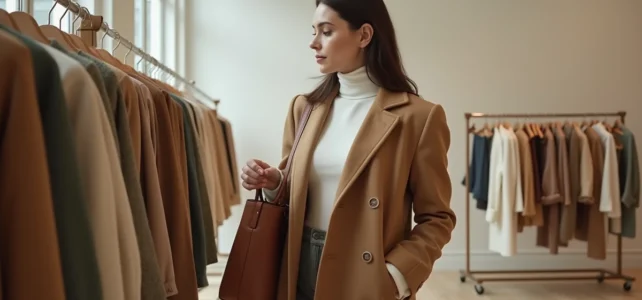
Raw denim is making a comeback on the runways at the same time that African artisanal textiles are gaining ground in European capitals. How do these two dynamics coexist, and what do they reveal about current fashion? This article compares the major fashion trends of the current season, their origins, and their diffusion logics.
Artisanal textiles and diasporic fashion facing European seasonal collections
Fashion trends follow two very different diffusion circuits. The first is still driven by European houses and their seasonal calendars (spring-summer, autumn-winter). The second emerges from hybrid events, shorter in duration, focused on cultural storytelling.
| Criterion | Seasonal Collections (Europe) | Diasporic Pop-up Fashion (Europe) |
|---|---|---|
| Format | Runways, showrooms, pre-orders | Temporary events lasting a few days |
| Duration | Cycle of several months | Often less than a week |
| Main Channel | Traditional retail, e-commerce | Direct sales, social media |
| Recent Example | Paris Fashion Week, SS 2026 collections | IN MOTION PARIS (July 3-5, 2026) |
| Textile Positioning | Denim, tailoring, floral prints | Artisanal know-how, local weavings |
The event IN MOTION PARIS brings together clothing, jewelry, perfumes, and accessories from contemporary Afro designers in a pop-up format in Paris. The cultural dimension takes precedence over the logic of classic seasonal collections. This type of event has been increasing in frequency over the past two years.
The designers participating in these pop-ups do not seek to replicate the Fashion Week calendar. They rely on local textile know-how (weaving, dyeing, embroidery) reinterpreted in contemporary cuts, producing an aesthetic distinct from usual seasonal trends.
To follow these underlying movements and their concrete manifestations in wardrobes, the fashion section of Les Galeries de la Mode compiles analyses and selections throughout the seasons.
Key Colors and Materials of the Spring-Summer 2026 Season
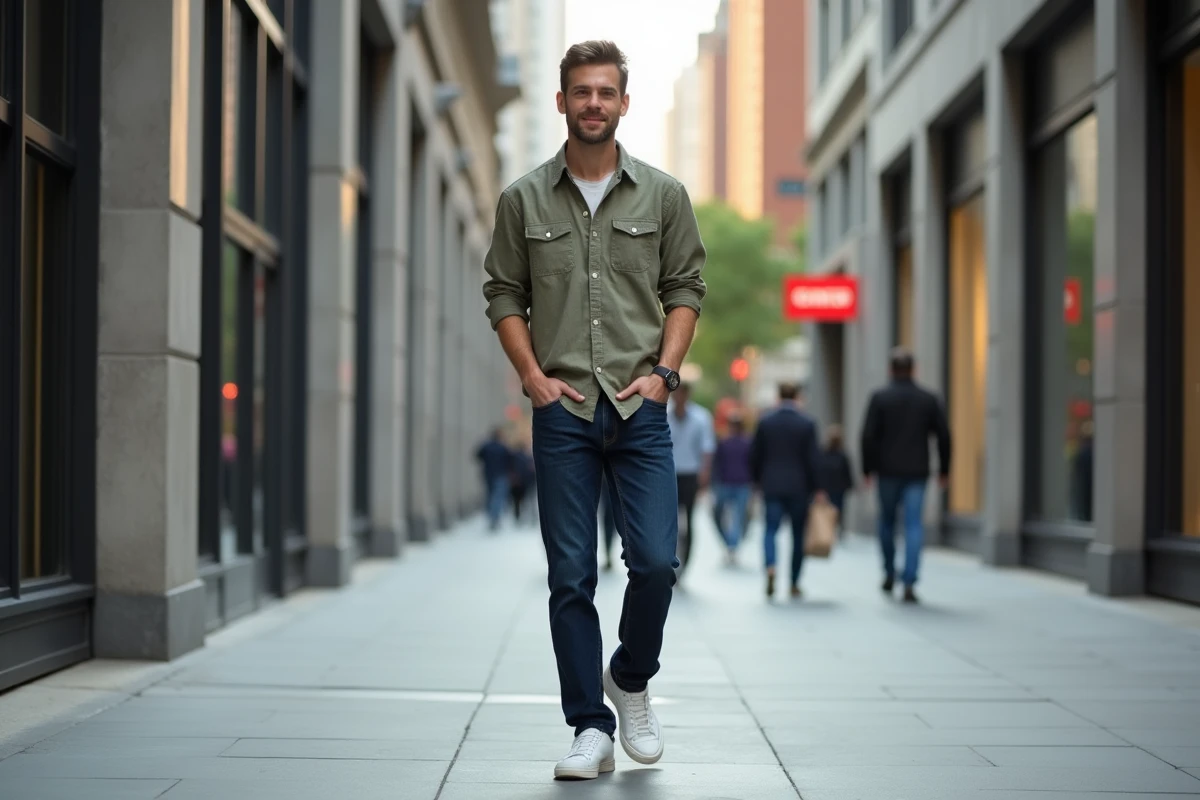
The spring-summer 2026 runways confirm several directions that were already emerging the previous autumn. Raw denim retains a central place, worn as jackets, skirts, or wide trousers. Bright colors (butter yellow, poppy red, cobalt blue) share space with more neutral tones that anchor the silhouettes.
Floral prints and stripes dominate the summer collections. Designers pair them with oversized cuts or structured tailoring, depending on the intended style. This coexistence of ample volumes and sharp lines characterizes the season.
In terms of materials, the trend is towards low-impact textiles. Several brands are betting on recycled fibers or dyeing processes that use less water. Linen and organic cotton are appearing in an increasing proportion of collections, although this is not yet widespread.
- Raw denim: available in short jackets, midi skirts, and barrel trousers, it remains the thread running through the spring-summer season
- Butter yellow: a key color spotted on several runways, worn in a total look or as an accent on an accessory
- Relaxed tailoring: slightly oversized blazers, fluid trousers, a silhouette that borrows from menswear without copying it
- Structuring accessories: rigid bags, square-toed shoes, graphic glasses that define the overall look
Local Fashion Directories: A Concrete Tool Against Fast Fashion
Beyond aesthetic trends, the structuring of responsible fashion offerings is progressing. Local platforms are beginning to systematically list creators engaged in local production.
In Quebec, the Quebec Fashion Directory (ModeMTL) lists brands that support a local and sustainable approach. The stated goal: to position these creators as a concrete alternative to fast fashion by highlighting territorial impact and the circular economy.
This directory model does not yet exist on the same scale in France, but similar initiatives are emerging in Paris and Lyon. Ivorian designers, for example, are gradually establishing themselves in the French fashion scene by combining artisanal know-how and cuts adapted to the European market.
The difference between a local directory and a simple directory lies in curation. A directory like ModeMTL filters brands according to production criteria (place of manufacture, materials used, working conditions). This selection provides consumers with a reliable reference, where the term “eco-responsible” on an e-commerce site often remains vague.
Current Fashion: What Hybrid Formats Change for Creators
The pop-up format alters the relationship between creators and buyers. In a traditional runway show, the audience consists of professional buyers and journalists. In a pop-up like IN MOTION PARIS, the end consumer buys directly from the creator, without intermediaries.
This direct sale has several consequences for current fashion:
- Creators test new pieces in real-time and adjust their production based on audience reception
- The selling price can be lower (no distributor margin), making artisanal clothing accessible to a broader audience
- The storytelling around each piece (origin of the fabric, manufacturing technique) becomes a selling point as strong as the style itself
However, these events remain limited in geographic reach. A three-day pop-up in Paris attracts a few hundred visitors, whereas a collection distributed in retail reaches thousands of points of sale. Online visibility partially compensates for this gap, especially through social media that amplify the reach of these events far beyond their physical audience.
The fashion trends of the season can thus be read along two axes. The first, driven by Fashion Weeks and retail, disseminates dominant colors, cuts, and materials on a large scale. The second, fueled by cultural pop-ups and local directories, offers alternatives rooted in specific know-how. The two circuits are increasingly intersecting, especially when designers from the diasporic scene are included in the selections of major European distributors.