
1792, the year when the State began to record everything: since then, every marriage in France leaves a trace in the civil registry. But while administrative memory promises rigor, it also imposes its barriers: it is impossible to freely consult a marriage certificate less than 75 years old, unless a direct link with the spouses can be proven. Town halls jealously guard their recent archives; departments, on the other hand, are gradually digitizing old records, but coverage remains uneven from one region to another.
Why the marriage date is sometimes difficult to find in France
Searching for a person’s marriage date in France requires navigating a complex administrative heritage, the result of centuries of evolving practices. Before the Revolution, it was the parish registers, kept by the priest, that served as the official memory. Their condition today depends on the care taken in their preservation, the whims of time, or local digitization efforts. After 1792, the civil registry took over, placed under the responsibility of each town hall: the result is thousands of municipalities, each with its own archiving habits and potential gaps.
Another hurdle: the legal delay of 75 years. Without proof of direct descent, there is no hope of obtaining the complete record for a recent marriage. The decennial tables and annual tables can help target a year, but their coverage only extends to municipalities that keep them up to date. There is no comprehensive national database: a simple move or a variation in the spelling of a name complicates the search.
Sometimes, the marginal note on the birth certificate provides the key: date and place of the marriage, but it must also be ensured that the administration has updated it, a practice far from systematic, especially for older generations. Add to this divorces or remarriages, and the puzzle becomes more complex: each event changes the game, but one must also know where and when to search.
To move forward despite these obstacles, consulting the marriage register on Mariages du Monde emerges as a structured method. This platform centralizes, according to geographical areas and periods, reliable data that facilitate the reconstruction of a marital path. This time-saving allows one to avoid lengthy and often fruitless procedures with overwhelmed archive services or overloaded town halls.
Where and how to consult civil registry records for effective research
To find the marriage date of a person, one must master the workings of the French civil registry. Since the end of the 18th century, each union has been recorded in a civil registry: first under the care of the town hall, then, after a certain period, entrusted to the departmental archives. These documents are remarkably precise: names, first names, dates and places of birth, identities of parents and witnesses, indication of a possible marriage contract, everything is there.
Access to these registers depends on the period being searched. If the event is less than 75 years old, one must contact the town hall of the marriage location and justify a legitimate reason to consult the record. Beyond this timeframe, the departmental archives take over and often offer online access. The decennial tables are a valuable aid: they are alphabetical lists cataloging all marriages over a decade in a municipality, allowing for quick targeting of the desired year and record without having to sift through entire registers.
Here’s where to search based on the situation:
- At the town hall: for the most recent records, a direct approach, but one must justify the interest of the request.
- In the archives: free consultation, as long as the legal delay has passed.
- On the departmental archives’ websites: free access, with a search engine by municipality, year, or name, and viewing of digitized documents.
Before 1792, the quest continues in the parish registers, accessible either online or in reading rooms at the archives. Another avenue: the marginal note on the birth certificate, especially for records after 1897, which sometimes indicates the date and place of the marriage.
To maximize the chances of success, one must cross-reference clues: dates and places of birth, censuses, deaths, publications of bans. The search resembles a slow ant’s work, where rigor and patience are essential in the face of the diversity of French administrative practices.
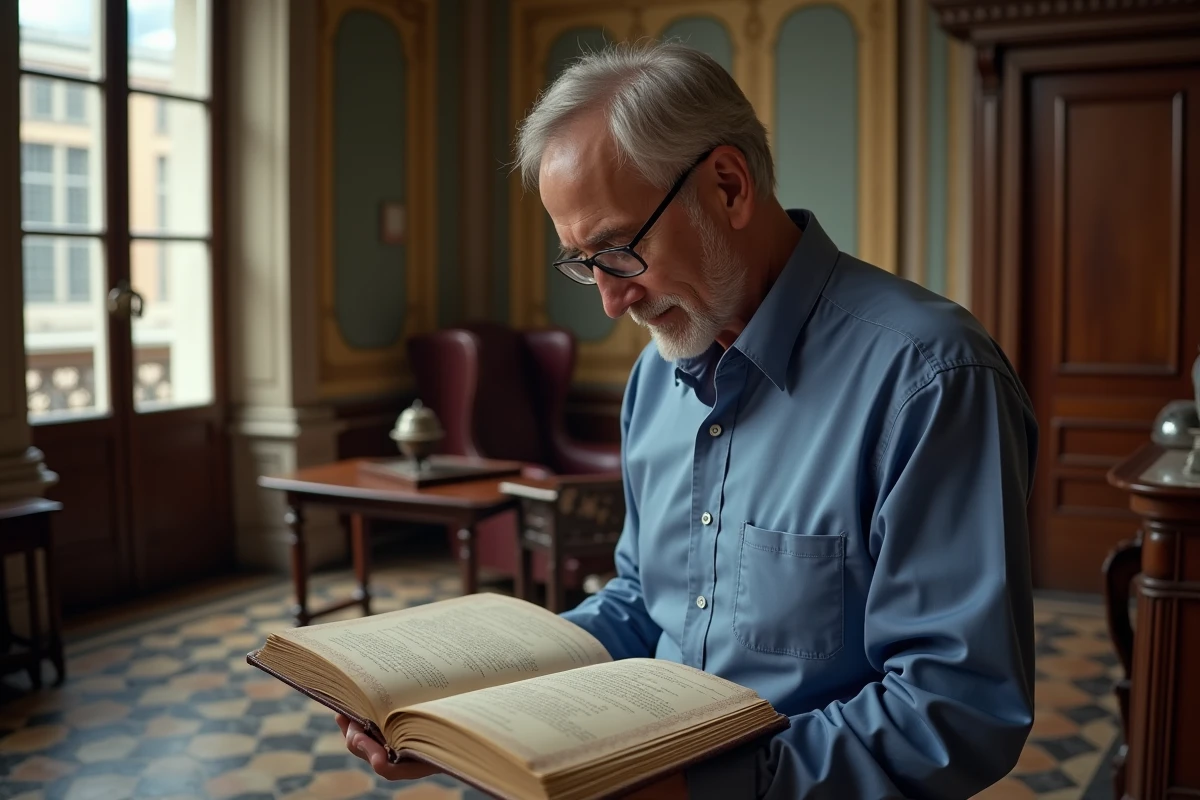
Marriage certificate, decennial tables, online archives: which resources to prioritize?
For those wishing to find the marriage date of a person in France, the marriage certificate remains the primary source. This official document, written either in the civil registry or in the parish registers for earlier periods, contains all the necessary information: complete identity of the spouses, exact date and place, professions, parentage, witnesses, existence of a marriage contract. Since 1850, the mention of a contract appears systematically; from 1897 onwards, marginal notes (divorce, separation) are added, enriching the file.
To speed up the search for a specific record, it is wise to rely on the decennial tables. True alphabetical indexes, they list all marriages celebrated by municipality and over ten years, allowing for quick targeting of the sought reference. These tables can be consulted at the town hall or in the departmental archives, generally covering the 19th and 20th centuries.
The online archives of the departments now offer easier access to digitized registers, decennial tables, and sometimes even censuses. The search can be conducted by municipality, year, or name; in many cases, it is possible to directly view the image of the original record. To enrich the investigation, nothing prevents one from relying on censuses or family photos: a couple listed as married on a given date in a census, a wedding photograph annotated with a date, all serve as secondary clues that help narrow down the search period.
The marriage contract, established by a notary and transferred to the archives after a certain period, constitutes another lead: it may indicate the date of the marriage or confirm the union. Each resource, by contributing its part, allows for the patient reconstruction of a person’s marital journey, a detective work where every clue counts, and where the satisfaction of discovery is matched only by the care taken in the search.
The pursuit of a marriage date, beneath its appearance as an administrative puzzle, sometimes offers the key to a family story or a forgotten piece of history. Through method and curiosity, the memory of unions gradually regains its contours, and each opened register revives a chapter thought to be lost.