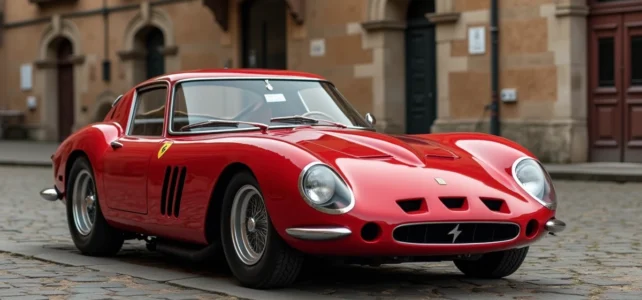
A rare car is defined by a production number low enough that the probability of encountering one on an open road is nearly zero. The threshold varies by era and manufacturers, but the principle remains the same: fewer units produced, the higher the symbolic and financial value.
Understanding what makes a model truly rare requires distinguishing several mechanisms. Deliberately limited production, prototypes never industrialized, accidental survival of a forgotten model: each category follows its own logic.
One-off programs and extreme bespoke: rarity manufactured by manufacturers
In recent years, several brands have structured divisions dedicated to unique examples. Ferrari Special Projects, Lamborghini Ad Personam, Bentley Mulliner, and Rolls-Royce Coachbuild produce cars built in one, two, or three examples. These vehicles are commissioned and financed upfront by a unique client, with complete road homologation and factory support comparable to series models.
This industrialization of one-off cars marks a break. Where unique prototypes from previous decades often resulted from a misstep (project cancellation, special order not renewed), these programs transform rarity into a structured commercial offer. The manufacturer controls the number of units, the specifications, and traceability.
For those wishing to delve deeper into the rarest cars to know, the distinction between a factory one-off and an abandoned prototype radically changes the perspective. The former benefits from manufacturer support; the latter may pose issues regarding parts, documentation, and authenticity.
Historical rarities: Phantom Corsair, Helica de Leyat, and forgotten prototypes
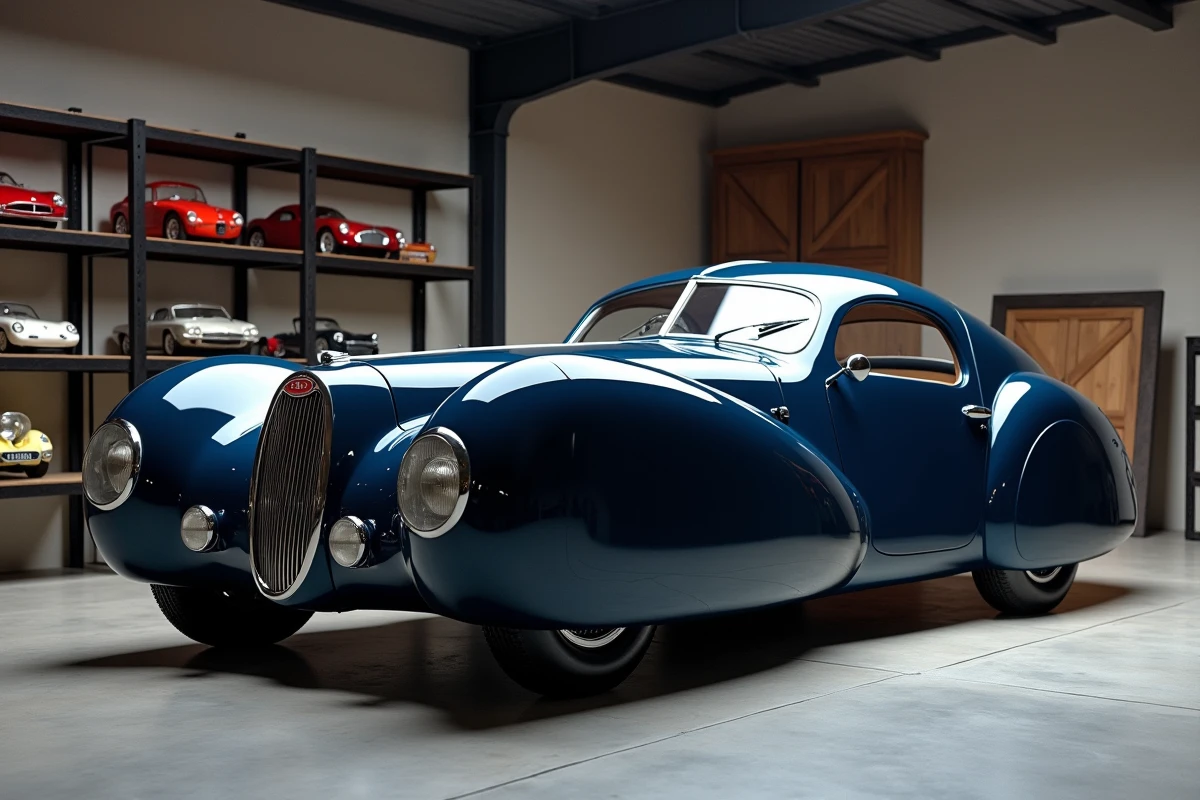
Some models have never gone beyond the prototype stage or very small series, and this is precisely what makes them legendary. The 1938 Phantom Corsair, designed by Rust Heinz and bodied by Bohman & Schwartz, exists in only one example. Its style inspired by naval architecture and its Cord V8 engine make it a literal museum piece.
The Helica de Leyat, designed in France in 1921 by Marcel Leyat, belongs to the same category. Propelled by a propeller, nicknamed “the wingless airplane” by the press of the time, it illustrates a dead branch of automotive evolution. These vehicles are not rare due to marketing strategy: they are rare because their concept did not find a market.
What distinguishes a prototype from a classic collectible model
A unique prototype has no reference value on the market. Its value depends on its documented history, its state of preservation, and the reputation of the manufacturer or designer. A collectible model (Ferrari 250 GTO, BMW 507, Aston Martin DB4 GT) has been produced in small series, has records, owner clubs, and an auction history that stabilizes prices.
- Unique prototype: no comparable market, value tied to provenance and original documentation
- Historical small series: known production records, network of specialists, prices tracked by auction houses
- Contemporary one-off: factory traceability, road homologation, value indexed to the brand and program
Rare and modern cars at auction: a changing market
Recent catalogs from RM Sotheby’s, Gooding & Co., or Bonhams reveal a clear trend in recent years: modern hypercars in limited series are gaining ground against icons from the 1950s to 1970s. Track-only special editions, series of a few dozen examples, anniversary versions: these models from 2000 to 2015 now regularly appear in prestigious sales.
This shift reflects a change in the profile of buyers. Collectors who grew up with 2000s supercars now have sufficient purchasing power to acquire them at auction. The criterion of rarity remains central, but the age of the vehicle is no longer a prerequisite for prestige.

Rarities without apparent prestige: the case of the Volkswagen New Beetle RSI
Rarity does not automatically guarantee prestige, at least not immediately. The Volkswagen New Beetle RSI, produced in only 250 examples in 2000, featured a 3.2-liter V6 engine with 225 hp and a deeply modified chassis. Long ignored in rankings, it is now experiencing rapid revaluation in the rare youngtimer market, particularly in Germany and Central Europe.
Specialized communities have formed around this model. This phenomenon illustrates a recurring mechanism: a model can remain invisible for years before its rarity is recognized. The gap between confidential production and market awareness creates windows of opportunity for attentive buyers.
Concrete criteria for assessing the rarity of a car model
Claiming that a car is “rare” without specific criteria holds little value. Several parameters allow for objectifying this notion:
- The number of examples produced, verified by the manufacturer’s records or brand clubs, remains the primary indicator
- The number of surviving examples, often much lower than the initial production, reflects the actual rarity on the market
- The existence of complete documentation (maintenance log, certificate of origin, ownership history) conditions the value as much as the rarity itself
- The road homologation status, which separates usable vehicles from static museum pieces
A model produced in a few hundred examples but with the majority having survived will be less sought after than a model produced in larger quantities but with very few remaining. Effective rarity, the one that influences prices, is measured by the number of units available at a given moment, not the gross production figure.
The market for rare cars is thus segmented into distinct layers, from the unique prototype to the confidential youngtimer. The boundary between recognized rarity and ignored rarity is constantly shifting, in line with generational changes among collectors and the evolution of manufacturer programs.